Jlab: Creativity Station
A playful creativity kit designed by PACO Design Collaborative to extend the Junior Lab experience beyond the museum.
Junior Lab:
Creativity Station
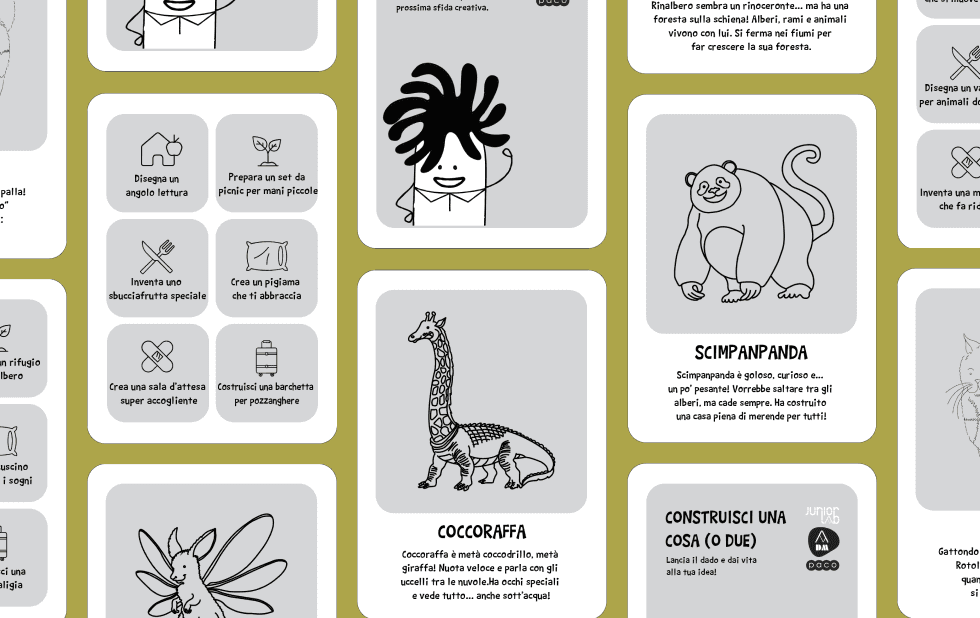
Jlab: Creative Mission is a screen-free educational toolkit that helps children think, sketch, and build their own imaginative solutions through hands-on design challenges. Developed during my internship with PACO Design Collaborative, the kit was designed to promote creative thinking at home and strengthen Junior Lab’s presence outside the ADI Design Museum.
ROLE
Strategic/Service Designer (Master's Thesis)
Tools
Adobe CC, Figma, Miro
Duration
September 2024-May 2025
See detailed case study →
How might we expand the presence of Junior Lab beyond the museum by creating playful, hands on tools that foster creative and critical thinking in children, while engaging families in shared, lasting experiences?
Goal
To design a tactile, low-cost creativity kit that allows children and families to engage with the core principles of design thinking, observation, imagination, empathy, and creation, through simple, repeatable missions.
Outcome
The final outcome was a black-and-white, narrative-based creativity kit featuring prompt cards, themed icons, character-driven challenges, and a reusable activity board. The kit was designed to be cost-effective, portable, and easy to produce, extending PACO’s educational ethos from page to play.

Research
My research began with direct involvement in Junior Lab workshops, where I facilitated activities and observed how children interacted with design prompts, materials, and storytelling. These hands-on sessions allowed me to see how kids interpret design challenges, express ideas visually, and collaborate in real time.
I noticed that children naturally applied design thinking principles, asking questions, experimenting, and adapting, when given a mix of freedom and structure. I also observed how facilitators framed concepts like function, empathy, and aesthetics through playful discussion and physical prototyping.
In parallel, I conducted interviews with stakeholders at PACO and the ADI Museum and assessed Junior Lab’s digital presence. I analyzed how parents interacted with the brand, how bookings were made, and how accessible the program was from a communication standpoint.
My secondary research focused on educational products and museum merchandising, identifying what formats best promote creativity, storytelling, and hands-on learning. I explored books, kits, and tools across Europe, mapping them along four thematic pillars, Observe, Imagine, Understand, Build, which later became the framework of the kit.
Insights
Facilitating and observing Junior Lab workshops gave me valuable insight into how children engage with design thinking through play. These experiences, alongside stakeholder interviews and product research, shaped the principles that guided the development of the kit:
Facilitating the workshops myself revealed that children thrive in tactile, imaginative environments, they were highly engaged when prompts were playful, not prescriptive.
Kids interpret challenges differently, showing that open-ended formats allow for diverse expressions of creativity.
Design thinking principles like empathy and iteration can be naturally introduced to children through storytelling and simple prototyping.
Parents want screen-free activities that feel both educational and enjoyable, they appreciated formats that invited co-creation and dialogue with their kids.
Museum-based education can live beyond the walls: meaningful merchandising can reinforce learning, extend the experience, and invite families to explore design together at home.

Ideation
Building on earlier research and workshop facilitation, I explored how to translate Junior Lab’s design thinking framework into a format that was interactive, replayable, and accessible beyond the museum. My goal was to create a flexible toolkit that could support creativity at home while aligning with PACO’s educational values and visual identity.
Several formats were tested—including card decks, foldable posters, and dice-based systems, to balance guided learning with imaginative freedom. I drew inspiration from The Extraordinaires Design Studio, Rory’s Story Cubes, and PACO’s own thematic books, adapting their mechanics into a child-friendly flow based on the four Jlab pillars: Observe, Imagine, Understand, Build.
The result was a modular system where children could use familiar symbols, characters, and themes to engage in hands-on design challenges, encouraging storytelling, empathy, and experimentation, without screens or complex instructions.
Final Solution
The final outcome was Jlab: Creativity Station, a narrative-based creativity kit that brings the Junior Lab experience into everyday spaces. It was designed to be screen-free, low-cost, and easy to reproduce, staying true to PACO’s visual language and mission.
The kit includes:
Character Cards to introduce playful protagonists
Prompt Cards with six icon-based creative challenges
A six-sided die featuring everyday settings (e.g., park, kitchen, school)
A reusable ideation board structured around the four pillars
Rather than being a standalone activity, the kit functions as a springboard for collaborative exploration, allowing children and families to turn observations into ideas, and ideas into tangible creations. It serves as a meaningful extension of PACO’s educational approach, bridging museum-based learning with everyday imagination.
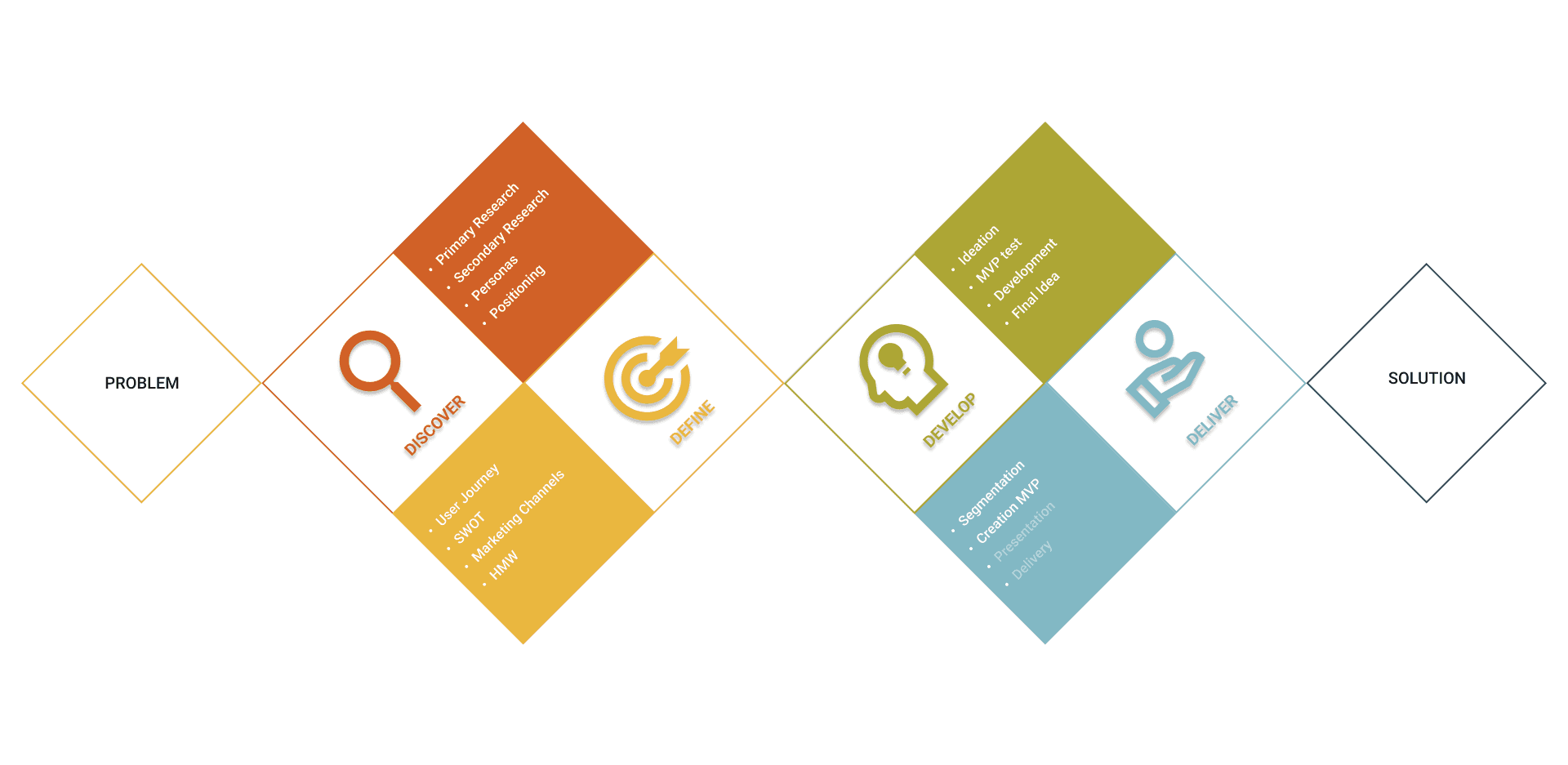
Double Diamond
Areas of Research

User Jourrney of the Jlab

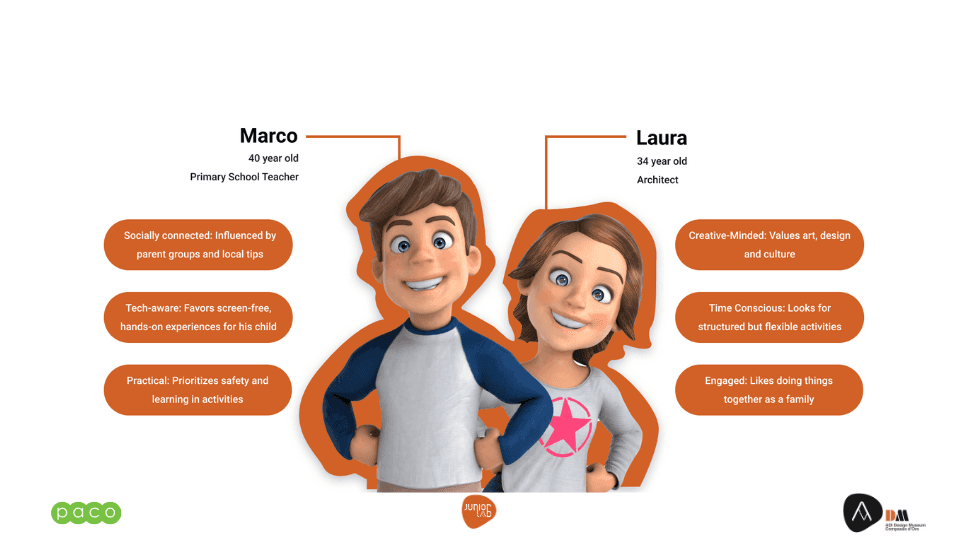
Buyer Persona
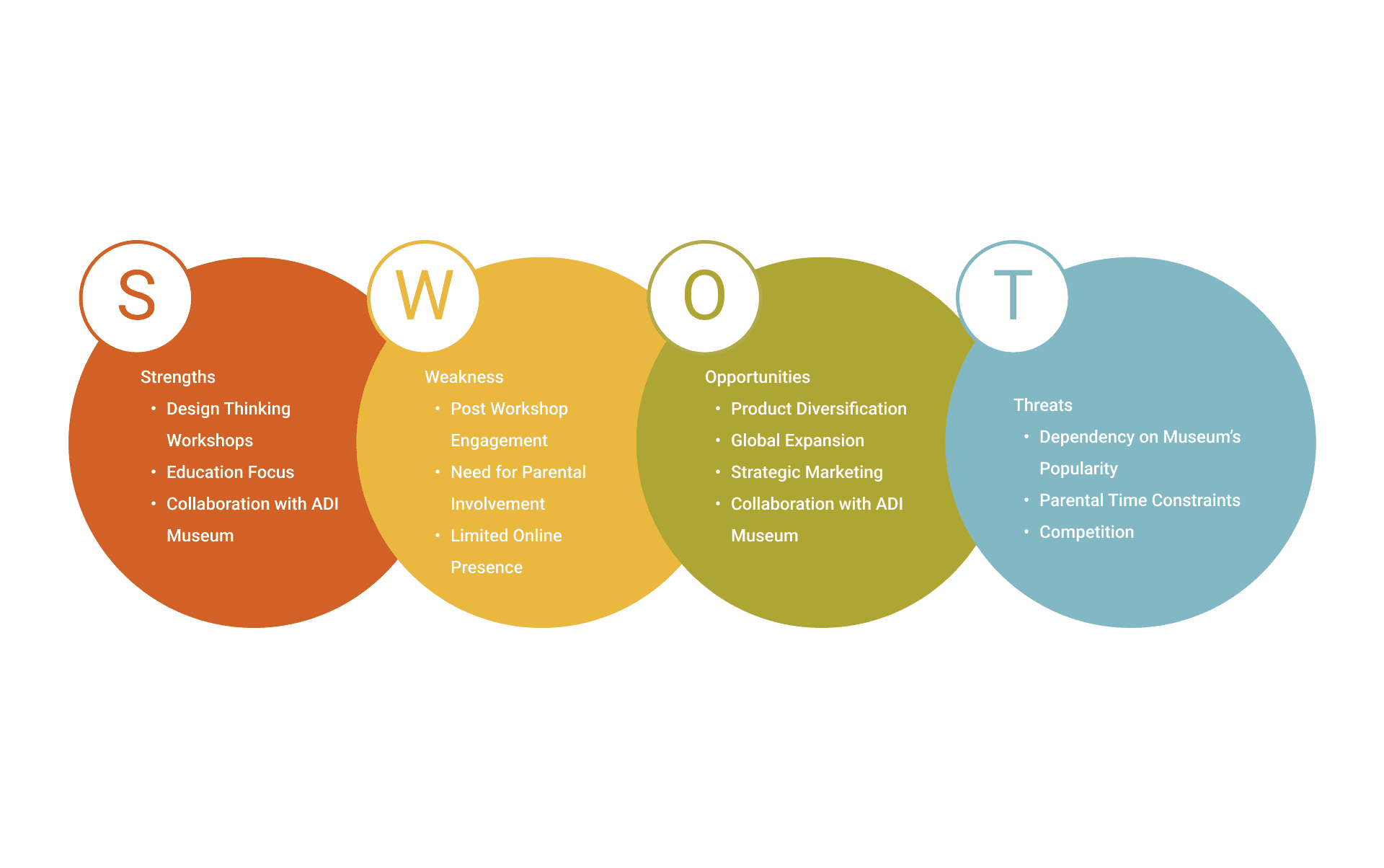
SWOT
Opportunities

Roadmap
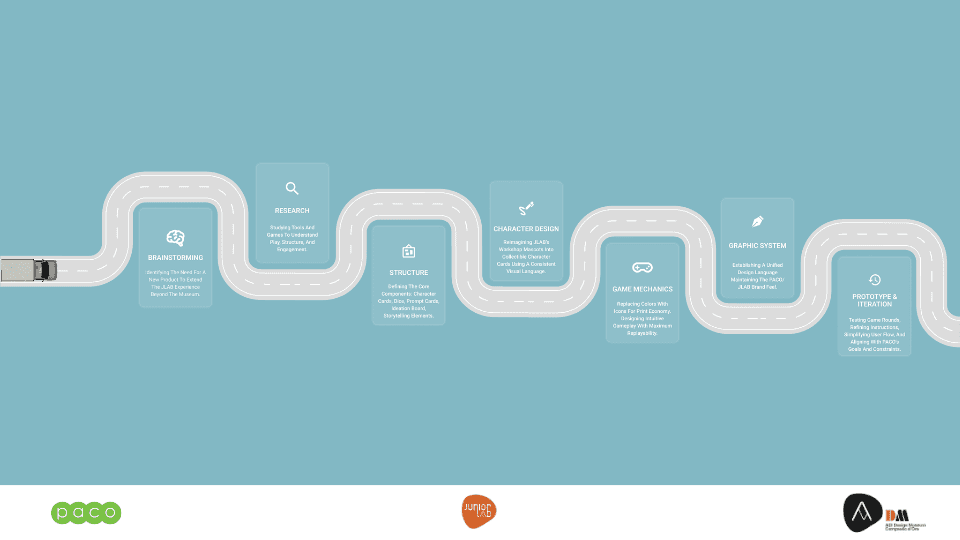
Hypothesis of the future

Key learnings
My internship at PACO Design Collaborative was a deeply meaningful experience that strengthened my understanding of how design can drive education and social change. Contributing to the Junior Lab taught me how to simplify complex ideas like design thinking into playful, hands-on formats for children, while also honing my skills in research, facilitation, and strategic development. It showed me the power of co-creation, storytelling, and designing with empathy. I’m grateful to have played a role in shaping tools that spark creativity in children, and I look forward to continuing to use design as a way to create positive impact in the world.